On the eve of the founding of PRC, Mao Zedong sought support from Washington by inviting Ambassador Leighton Stuart to visit with him in Beijing. However, Washington’s instruction was “no contact” with the Chinese Communist Party (CCP) until the “dust settles”. Facing daunting challenges of post-civil war reconstruction Mao turned to Moscow. The dust finally settled with the outbreak of the Korean War in June 1950, leading to the long American policy of debilitating embargo on China until President Nixon visited Beijing in February 1972.
It took Washington three decades to finally reverse its no-recognition policy toward China when President Carter made the final decision to normalize relationship with Beijing in December 1978. Despite frequent frictions the American policy of engaging China, supported by the strong belief that “by opening our markets to China, encouraging American business to invest in China, and outsourcing our manufacturing to China”, Washington could “facilitate China’s entry into the so-called ‘rules-based international order’”, was as long as the American earlier policy of isolating China.
President Obama and his advisors began to question the rationale of the engagement policy and realized how wasteful it was to squander American resources in countries like Iraq and Afghanistan. While the White House was debating on how to initiate the Pivot, the call to change the American grand strategy toward China became louder. At the same time, the American effort to effect a systemic change in China, known in China as “color revolution”, did not abate. Many, including James Mann, described this attempt as the “China fantasy”.
Donald Trump became the president in 2017. His administration began testing if it was possible to create a new kind of great power relationship with China but ended sentencing the American policy of engagement with China to death. In July 2020, at the birthplace of President Nixon, Mike Pompeo, Trump’s secretary of state, declared that “we can never go back to the past” because the China challenge was too great. His approach to deflate this challenge was to call on the West to decouple with China on all fronts. He said, “The United Nations, NATO, the G7 countries, the G20, our combined economic, diplomatic, and military power is surely enough to meet this challenge.”
In practice, President Trump did not value all the institutions that Pompeo desired to unite in this new crusade against China, but President Biden was deadly serious about “a new alliance of democracies,” believing it would eventually win the epic battle against a so-called coalition of autocracies.
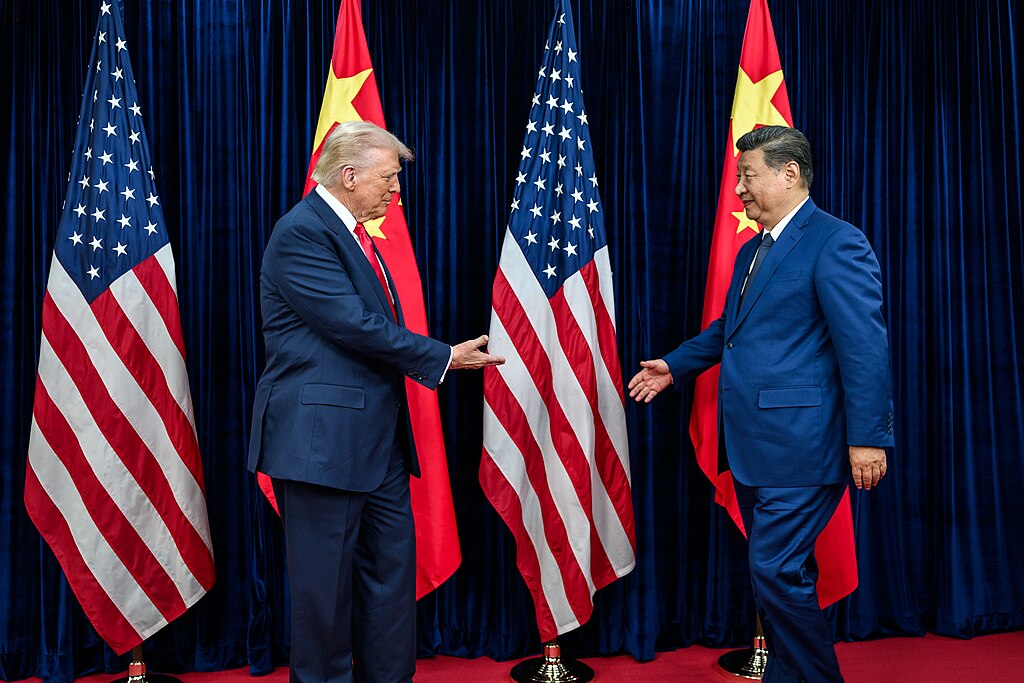
President Biden did not have a second term to see a clearer outcome of this confrontation he had envisioned. In fact, he became more concerned about the U.S.-China rivalry veering into conflict, seeking to erect guardrails by meeting with President Xi Jinping of China three times in 2022, 2023 and 2024 respectively.
Trump became the American president again in 2025, initially believing he could knock China out once and for all by imposing a sky-high tariff on Chinese goods. After six months of vacillation between bluff and negotiation it seems President Trump and his national security team have finally got China “right”—the past attempt to effect political change in China is delusional, the hope to implement economic decoupling with China is both dangerous and impossible, and the working formula is to peacefully coexist with China and prepare to gain the upper hand in the economic and technological sector.
President Truman got China wrong because he saw China as an atheistic junior brother of the Kremlin. Presidents Eisenhower, Kennedy and Johnson were all too timid to challenge this perception. Presidents Nixon and Carter felt “the world cannot be safe until China changes”. They were steps ahead of their predecessors in figuring out the Chine enigma. All their successors were not wrong in continuing engaging China but intellectually deficient in not realizing that China cannot be easily reshaped into what they preferred to see. In fact, China has been doing everything possible to resist and stop the political changes wanted by the idealistic Americans.
Presidents Obama and Biden made progress in getting China right. Through trials and errors of his first term and the first year in his second term, President Trump has scored more points in getting China right and as a result, the 2025 National Security Strategy declares the American China policy is to “win the economic future” and “prevent military confrontation”.
In this new framework, Washington and Beijing may be able to figure out how to find acceptable ways to co-prosper and contribute to global peace and prosperity.