
China has become the world’s undisputed leader in green technology, producing more solar panels, wind turbines, and electric vehicles than any other country—a phenomenon usually told through the language of innovation, scale, and ambition.
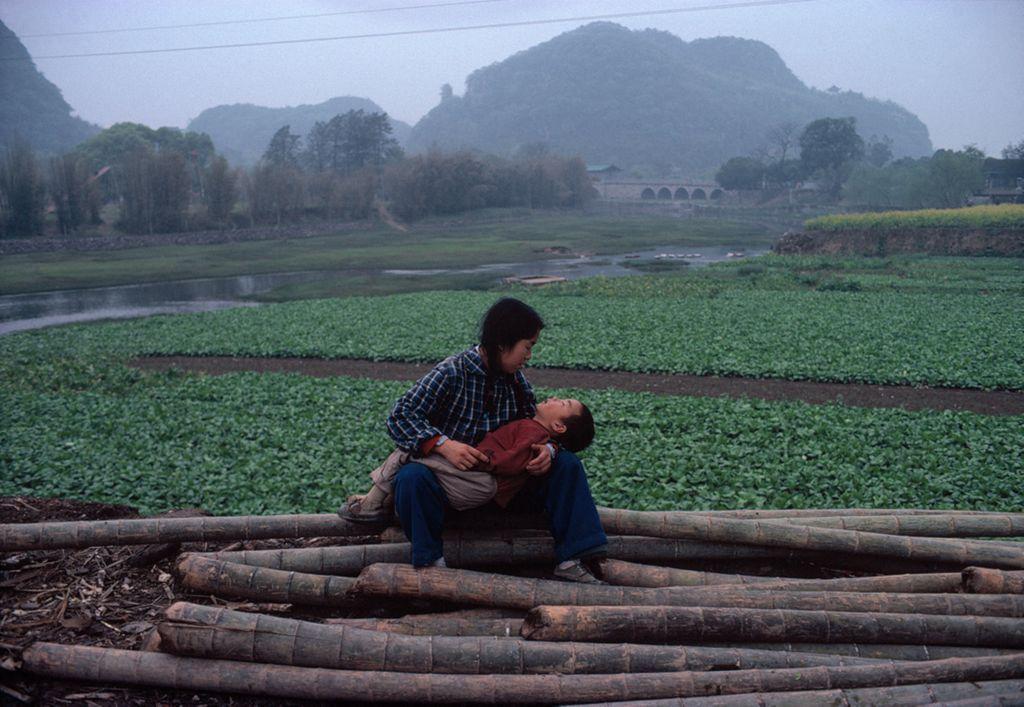
Jia-Ching Chen’s new book, Ecological Demolition, tells a different story, one that begins not in gleaming factories but in the rural villages of Jiangsu province, where farmland that fed generations has been razed to make room for solar panel plants. Villagers have been displaced—sometimes for years—waiting for promised housing that may never fully replace what they lost. Drawing on eighteen months of archival and ethnographic fieldwork, Chen shows that China’s “ecological civilization” is not only a story of environmental progress, but also one of demolition, dispossession, and inequality.
Chen is an Associate Professor in the Department of Global Studies at the University of California, Santa Barbara, where his research focuses on China’s role in shaping the global green economy and the spread of Chinese planning expertise abroad. He holds a PhD in City and Regional Planning and a professional Master of City Planning degree, both from UC Berkeley, and previously taught at Penn State. Before turning to academia, he worked in social movements, organized labor, and participatory planning and architecture—experience reflected in his close attention to the people navigating these transformations from the ground up.
Vimi Wang: Your book’s title, Ecological Demolition, pairs two words we don’t usually see together. What is the story behind that phrase, and what did you want it to signal to readers before they even open the book?
Jia-Ching Chen: The title signals a contradiction and a tension: ecological change can incur intense forms of transformation, including displacement, dispossession, and the upending of people’s life worlds—in this case, rural villagers in China. This insight comes from political ecology, which centers on the basic understanding that social, economic, and environmental change are inextricable from one another. Any environmental change carries political-economic consequences, and any political-economic change carries environmental consequences. Because of power relationships in society, those changes tend to impact people differently, across pre-existing differences in privilege, economics, and power.
VW: For someone who has never set foot in rural China, can you walk us through what “ecological civilization” looks like on the ground? What does a demolition or resettlement project look like in practice?
JC: Ecological civilization is fundamentally about scaling up Chinese centralized planning processes. Planning has become much more extensive—covering essentially the entire territory of the country—but also much more fine-grained, reaching down to village-level land use. That’s a totally new phenomenon in China. As a result, it has transformed people’s lives very unevenly across rural China. In some places, like the ones I studied, it has driven China’s rapid environmental transformation alongside its urbanization. Over the past fifteen to twenty years, China has urbanized at an unprecedented speed and scale, moving hundreds of millions of people from rural areas into more urbanized ones.
On the ground, people are being removed from their homes. Villages and farmland are repurposed for industrial uses, like solar panel factories, or consolidated into larger-scale commercial agriculture. That encompasses a shift away from smallholder farming, where families work the land directly, toward industrial agriculture with more machinery, more fertilizer, fewer workers, and higher intensity outputs. Over time, rural China has come to produce more staple grains on less land and with fewer workers.
On the flip side, when a village is demolished, people don’t simply move into permanent housing. They move into temporary housing and may wait one, two, or even five years—as I saw in Yixing, Jiangsu Province—before new homes are completed. A cycle of displacement and rebuilding emerges: land is cleared, construction begins, displaced residents wait—sometimes for several years—before eventually moving into new housing. At the same time, many of the people carrying out the demolition and construction are themselves migrants displaced from rural livelihoods elsewhere. It’s a cycle of dispossession, displacement and rebuilding that underpins this broader transformation.
One important point is that ecological civilization complicates the common picture of China’s environmental transformation and urbanization. People often imagine China’s rapid urbanization as almost instantaneous, but becoming “urbanized” is much more than changing a household registration or pouring concrete—it’s a process that unfolds over many years. As people navigate those unplanned dynamics of change, they’re often able to make these transitions work. Without their ability to improvise and adapt, these larger planning projects wouldn’t succeed socially, economically, or politically.
VW: That point about rural-to-urban transformation not being instantaneous is crucial. China is often praised as a global leader in renewable energy and green tech, yet your book argues this transition has also involved displacement and new inequalities. What’s the biggest misconception people have about China’s green development story?
JC: The key misconception is that China stands alone—that it’s totally exceptional. Take planning as an example. Spatial and environmental planning have been elevated over the last couple of decades. China has tiers in higher education and scientific research investment that correspond to how much the country prioritizes a field and encourages top students to pursue it. That elevation has involved a great deal of expertise and collaboration with countries like the United States and universities around the world. Thus, its policy approaches, its knowledge, and its research have all been part of a deeply global process.
That’s not to take away credit from China’s remarkable rise in scientific research, but to emphasize that it hasn’t happened in isolation. The same is true of its green economy. China is certainly the leading example of green industrial and energy policy given the extent to which it has fueled the global energy transition through exports of wind and solar equipment. But China also built those industries within a much larger ecosystem of subsidies and energy transition policies in places like Germany, the broader European Union, and Australia.
About twenty years ago, many countries introduced large subsidy programs to support technologies like wind and solar. Germany, for example, invested substantial public funding in rooftop solar. Policy experts—including researchers at Lawrence Berkeley National Laboratory here in California—thought about how those subsidies could drive industrialization. While the subsidies were nominally designed to encourage people to install solar panels, they were also intended as a market signal: to encourage firms to invest in manufacturing capacity so that the cost of technologies like solar panels would eventually come down.
Quite explicitly, many of the people designing those policies saw China as the ideal place. They believed China had the labor capacity and the experience to scale manufacturing. For many years, China couldn’t afford to install most of the solar panels it produced—it exported almost all of them. It wasn’t until the mid-2010s, when there was massive overcapacity—too much solar being produced and sold below cost—that the industry had a massive market correction. The world’s largest solar company at the time, Suntech, went bankrupt, even though its CEO had once been the wealthiest person in China.
That market collapse required significant restructuring. Factories shut down, companies were consolidated, and the industry went through a painful adjustment. But it also allowed China to transform its industrial policy into an energy transition policy. The government began setting ambitious annual targets for domestic solar installation, and those targets were consistently exceeded. That transformation happened within a global market context—it was only possible because of the circulation of international capital, technologies, and markets.
It is important to hold both realities at once: China has played an exceptional role in making these achievements possible, but it has not acted alone. It has operated within global expectations, policies, and markets that have shaped both its actions and the opportunities available to it at different moments.
VW: Pivoting to a more personal angle. You write about resettled villagers navigating fractured kin networks, and migrant workers hired to demolish their own communities’ homes. Could you share one story or encounter that has stayed with you long after your fieldwork ended?
JC: I often think about a group I discuss in the book—people involved in brick recycling and reclamation from demolition sites. A group of parents, who had migrated from Sichuan, western China, told me they had been away from their children for seven years. A lot of industrial migrant workers in the factories of Dongguan or Shenzhen try to go home annually. But these parents had been away from their children for so long that this separation had become part of how they understood their role: to work away from home and send remittances back to support their families. My younger daughter just turned seven, and I cannot imagine being away from her for her entire life.
On the other hand—and this is a story I do not write about in the book—there were migrant workers, eighteen to twenty years old, who came to work in solar factories. I met them on a bus as they were heading out to go fishing. During their downtime, they would fish for leisure because it did not cost money and allowed them to supplement their diet with something familiar. But over the years, as the rivers became polluted with construction waste, they were no longer able to fish. They continued going, though, holding onto that custom even as the context around them was changing.
I was also struck by the contrast between those young workers and their counterparts at other factories, where employees were required to have four-year university degrees. One example was a joint venture between a German company, a local company in Yixing, and the local government. Those workers needed engineering backgrounds to work on the production line. The company had developed a semi-automated production process. For certain steps, such as moving newly produced solar cells, workers would hand-sort the materials, and the company tracked how many each worker broke. Over time, their bodies became extremely sensitive to the fragility of the silicon wafers.
The company’s CEO, a German-trained solar engineer, believed that in China, it was more economically and environmentally efficient to maintain certain stages of semi-automation, using highly trained labor rather than pursuing full automation. She instilled in workers the idea that their movements had environmental value: maximizing speed and cost-efficiency while also aiming for zero breakage of the wafers. This contrasted sharply with workers at lower-end assembly plants, who performed panel soldering assembly using leaded solder, without proper face masks, while living in crowded dormitories. Both groups were migrant workers, but their experiences were completely different.
In the larger process of dispossession and dislocation, what struck me most was people’s desire to step outside their day-to-day experiences and reflect on them with me. It was remarkable. I am sure there were times when someone was not the right person to approach, but my overwhelming experience in rural China was that people wanted to be understood—and, moreover, to make sense of their own experience. This book could not exist without the generosity of those people and their willingness to share their stories in ways that were so enlightening and revealing about the transformations taking place around them.
VW: These personal experiences reveal dimensions of China’s transformations that are often overlooked in broader discussions. Moving toward the environmental dimension of your book, many critics argue that environmental initiatives are sometimes little more than “greenwashing.” Your work seems to make a different argument—that these projects are environmentally real, but their social costs are often overlooked. Why is that distinction important?
JC: This goes back to the basic insights of political ecology. Green is what we want, and we want it yesterday—we want it now. But the speed and scale of these transformations, I argue, eclipse our social institutions’ capacity for meaningful engagement, consent, and right relationships across these global processes of change. That is true in China, the United States, and elsewhere. People get left behind in these political-economic-ecological transformations.
The distinction matters because these are changes we do want, but the way they unfold often reproduces existing forms of inequality and environmental injustice. Renewable energy, the so-called green transition, is not the polar opposite of fossil fuels—and that is true materially as well. Fossil fuels remain deeply embedded in renewable energy production itself, from hydrogen production to powering factories that manufacture solar panels. In China, the use of coal has dropped significantly from seventy percent of grid power a decade ago, but it still accounts for over half of electricity, and coal-related air pollution continues to cause around hundreds of thousands of premature deaths each year.
The point is not that the green transition is somehow illegitimate. It is that the transition itself is always social. It reshapes people’s livelihoods, communities, and relationships to place. If we only measure its environmental outcomes in a few abstract metrics, we miss the unequal human experiences that make those outcomes possible.
VW: One of your book’s central ideas is the concept of “surplus ecologies.” What does this concept help us see that more familiar ideas like displacement or environmental injustice might miss?
JC: This concept builds on long-standing conversations in environmental justice. It highlights how people’s relationships—to the environment, to place, and to one another—can be disrupted by large-scale transformations, but also how people continue to reshape those processes through their own knowledge and practices. In rural China, resettlement and ecological projects often transform landscapes from the top down. But people do not simply disappear from those places. They adapt, reclaim spaces, and maintain relationships with the environment in ways that may fall outside official plans.
Surplus ecology is not a completely new idea, but it offers a different way of emphasizing that ecological change is not only about land or technology—it is also about people, culture, and the relationships built around a place over generations. I was trying to capture how ecology can be planned as an abstract national project, while people experience it as something deeply personal and local. Even when places are transformed, those relationships remain in people’s knowledge, practices, and ways of navigating change.
VW: Is what you’re describing unique to China’s political system, or do you see similar tensions—green development creating new forms of inequality—emerging in democracies pursuing ambitious climate infrastructure, like the US or Europe?
JC: For much of its history, the democratic West has viewed the PRC as an authoritarian “other” to our own political system. People often criticize China for its human rights abuses and its capacity to carry out massive social change, but that same capacity is also praised—China has lifted more people out of poverty than any other political and economic system in history. At the same time, China is both relied upon and targeted. It plays a central role in global supply chains, including the production of rare earth elements and materials critical to the green economy.
The second point is that environmental inequality is not unique to China. China has achieved unprecedented transformation, but many of the tensions we see there also appear in the United States and elsewhere, though in different forms. I have been doing research in California with colleagues on environmental and energy transitions in places like Kern County, a major oil- and gas-producing region. There, we see tensions between renewable energy investment, existing industries, and farmworker communities that have experienced environmental harms for decades.
As investment flows into green infrastructure, the question becomes: who gets to shape these transitions? Too often, communities that are most affected by environmental change are treated as people who simply happen to live in the places being transformed. They are asked to accept an agenda created elsewhere, rather than being meaningfully included in shaping what that future looks like. These dynamics of inequality and the tensions between local communities and large-scale transitions are not unique to China. They reflect a broader challenge of how we continue to bridge the gap between global agendas and the people whose lives are transformed by them.
VW: Climate change remains one of the few areas where US-China cooperation is often seen as both possible and necessary. How should policymakers think differently about US-China climate cooperation in light of your findings?
JC: The idea of cooperation is key—recognizing China’s leadership, its ability to innovate in manufacturing, reduce costs, and manage vast supply chains. But we should also ask: what would it look like to build market relationships that recognize the workers and rural communities where these industries have been developed?
China’s rapid expansion of green industries has achieved remarkable successes, but it has also produced environmental and social costs. Recognizing those costs raises the question of whether there are better ways to manage this kind of transformation. China itself is now struggling with questions of farmland preservation, green space, and how to balance continued growth with environmental protection. This seems like an important ground for further research, partnership, and collaboration.
For the United States, policies like the Inflation Reduction Act represent an important step toward supporting domestic green industries, but there are also questions about long-term planning, scaling production, and ensuring that the benefits reach local communities. China’s experience with rapid expansion, industrial concentration, and overcapacity offers lessons that other countries should consider.
At the same time, energy policy is increasingly shaped by geopolitics. Many countries are concerned about energy security and domestic resilience amid a changing global order. I do not want to be naive and suggest that cooperation alone can solve these challenges. But the broader lesson is that global peace and security are built through cooperation, not simply through competition and antagonism. We have to find ways to pursue cooperation at a moment when the conditions for cooperation are becoming increasingly difficult. That is a major challenge, and it makes this kind of work more important than ever.