
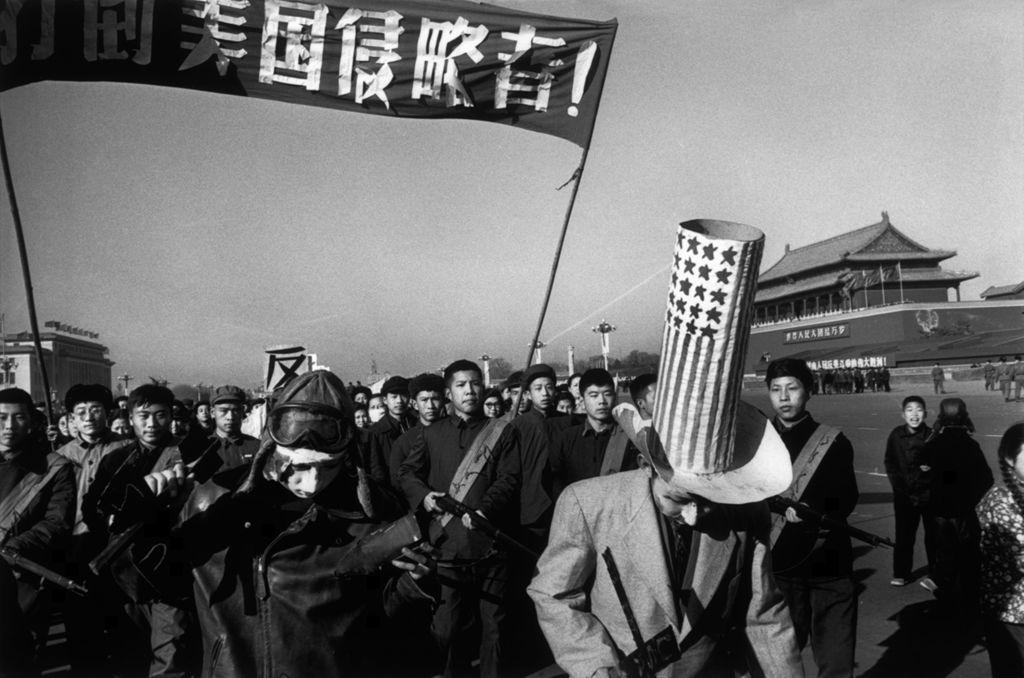
When it comes to China’s conduct on the world stage, much of the debate has centered on rule-breaking and revisionism. Pitman Potter suggests that China’s behavior may also be understood through a political-culture and legal-culture lens, as a form of globalized populism. Tracing a movement from social origins to state origins to globalized expression, he argues that populism in China is encouraged from the top down and projected outward, drawing on anti-elitism, sovereignty, and grievance over the supposed repression of China’s development. He identifies three modes of this populism, antagonistic, participatory, and passive, illustrated by COVID-19, climate change, and migration. He pairs this with a framework of practical resistance, through which China challenges the rules-based international order across accountability, prosperity, and community. Potter offers this as an augmentation of, not a replacement for, existing approaches based on state interests and rational actors, and he considers how middle powers like Canada might respond.
Potter’s research extends to many areas of PRC and Taiwan law and policy including human rights, foreign trade and investment, business regulation and dispute settlement. He has published many books, including China and the Rules-Based International Order (Vancouver: UBC Press, 2026) and Exporting Virtue? China’s International Human Rights Activism in the Age of Xi Jinping (Vancouver: UBC Press, 2021). Potter has also published over one hundred articles and essays. His research has supported significant legal reform and policy advancement. In Canada, Potter’s work has supported integrated approaches to trade and human rights. The impacts of his work also span across Asia, from food-security law and education systems in rural India to housing policies in Shanghai.
Pitman Potter retired from UBC in 2020. Prior to his retirement, Potter served in various roles at Allard Hall, including as Director of Chinese Legal Studies, Director of Asian Legal Studies, Director of the Graduate Program, and Associate Dean. Potter also served as Director of UBC’s Institute of Asian Research during 1999-2008, where he held the HSBC Chair in Asian Research (1999- 2016).
Georgia Pollard: In your book, you frame China’s conduct on the world stage as globalized populism rather than simple rule-breaking or revisionism. What made you reach for a domestic-politics lens instead of a more conventional international relations framework for China?
Dr. Pitman Potter: Okay, well, thanks for that. Well, what motivated me to write this book was just a general level of distress about the deteriorating relations between China and the West, the US in particular, but also Canada and the EU and so on. It seemed to me that the conventional analyses of rational actors, national interests, and so on, are quite useful in that regard, but I thought that a political culture, legal culture perspective might augment those perspectives. It also seemed to me that populism was, of course, becoming notable in global politics, as well as domestic politics.
I was reviewing Xi Jinping’s speech in 2021 at the 100th anniversary of the Communist Party of China, and I detected quite a lot of references to populism in there, references to the West oppressing and bullying China, so I thought I would kind of explore it. This resulted in a bit of a deep dive into the scholarly literature on populism. The more I did that, the more it seemed to fit China’s relationship with the rules-based international order, and so I proceeded with my book. When writing, I tend to start with a question or a problem, which in this case is China’s relationship with a rules-based international order, and then try to explain it.
As I explained in the 1st chapter on populism, it seems to me that we find populism presenting in both domestic and international contexts. In the domestic context, we see it in societies where people express resentment around inequalities and hostility to elites. We also see it by state actors, using populist rhetoric to gain support and also to attack opponents. We especially see that in the rise of the Communist Party in China.
In China, the populist perspective is less and less useful for the state because the state is the elite, so they don’t want to encourage criticism of the elite. We see what happened to Bo Xilai and to labor movements and environmental movements where the regime has little tolerance for public or even substate expressions of populism. But the rhetoric is still important, and China is still, in my observation, using that rhetoric to color its relations with the rules-based international order. That is what I refer to as globalized populism. This is distinct from the notion of global populism, which suggests a global movement. This is not about global populism. It’s about how the populist rhetoric of a state is shifted from an internal debate to an international debate.
As a matter of comparison, I looked at populist regimes in my chapter on this. I explained that populism is both left and right wing, this is what I call progressive and regressive expressions. In the book, I looked at Venezuela as a progressive and Brazil as a regressive populist state. I looked at Hungary under Orban as regressive, and Greece under Alexis Tsipras, the socialist government as a more progressive populism. I looked at India under Narendra Modi, as a regressive populist state. I see those examples internationally in other states, and I think China fits that outline usefully.
GP: You’ve said that populism in China is encouraged from the top down, not to critique the elite, but to be projected outward globally. Do you think this strategy is backfiring on the leadership at all? Does the push for populism give Chinese citizens a kind of agency to demand things of the government that it would not normally control?
PP: As we’ve seen with the white paper movement at the end of the COVID crisis, there is lots of political awareness among the people in China, particularly people in the urban areas. They are conscious of those discourses and prepare to use them when they can. However, the repressive arm of the state is still very powerful in China, and people have very few safe avenues for political expression. I don’t see it as having a major stimulative effect within China, absent sort of a crisis of state rule. But I think what the regime has done is by turning it internationally, has tried to build support for itself by portraying itself as standing up for ordinary people. China has also, as I note in a book, used this populist discourse to gain traction as a proposed leader of the developing world. That’s problematic in a lot of respects because China, although classified as a developing country, when you compare its economic statistics with its population, when you look at the modern cities in China, they certainly don’t look like developing countries. That’s a bit of an issue. China has tried to position itself as a spokes-state or spokesperson for the developing world. Populism and populist rhetoric is part of that. I would also add that its not that proponents of populist rhetoric actually believe it, or actually are part of it. They use this rhetoric for political purposes. That creates what you might call, using the Douglass North term, path dependency. Once you start using that rhetoric to justify yourself and explain your relationships with the world, the opportunities or the possibilities of moving away from that become more and more limited.
GP: You define three modes of populism: antagonistic populism, illustrated by COVID-19; participatory populism, illustrated by climate change; and passive populism, illustrated by migration. What determines which mode China adopts in a given crisis?
PP: I basically just observed China’s behavior in each of these 3 domains. On the COVID crisis, China’s relationship with the world system, whether it’s the World Health Organization or the WHO’s primary supporters (the US, the EU, and so on), was antagonistic almost from the beginning of that crisis because of the debates over COVID origins. China was very hostile to the suggestion of greater need for investigations and assessments of China’s role in the outbreak of the virus. That relationship with the world system was antagonistic from the beginning. That’s one of the reasons I used the term antagonistic populism to describe China’s COVID experience.
With climate change, China has participated actively in virtually all of the international climate processes: the framework convention on climate change, Paris Convention, even before that Kyoto, and so on. So they participated actively. However, they have been very clear that this is to suit China’s interests, and they have used populist rhetoric to describe it, and they’ve taken populous positions. For example, at the COP26 meetings in Glasgow, China and India were instrumental in changing the language on phasing “out” coal as a power source to phasing “down” coal.
China was also quite adamant in resisting changes to the Paris Convention standards on emissions. They did not join the methane pledge. They were quite supportive of the loss and damage process, although that process has not proceeded, subsequently, as far as China would have liked it. Although it’s stalled a bit, the rhetoric is still there. So China, in the process of climate change participation, has certainly furthered its own populist goals, which are essentially resistance to elites, grievance against the international system, and what I call practical resistance, which is essentially changing the narrative through its own legal procedures and regulations.
On migration, the reason I use passive populism is that China continues to use populous rhetoric to describe its handling of migration, but it hasn’t really done much. It has not really enacted the required suite of laws that are necessary to protect the rights of migrants, therefore its resistance has been largely passive.
In my examination of these 3 case studies, I was informed, in part, by the observations that I’d made from the literature on populism of identifying key features. These key features include opposition to elites, grievance ideology, and practical resistance. Practical resistance is really about changing the narrative through new laws and regulations, and there’s a fair amount of detail on that in the book.
GP: This question is more from a state perspective. Do you think these attitudes also filter down into the everyday thinking of ordinary Chinese citizens? For example, do citizens see COVID-19 in antagonistic terms, migration in passive terms, and are they encouraged to take part in climate-related efforts?
PP: My time in China and studying in China has reminded me that only a really small proportion of the Chinese people are actually able to access the details of China’s international positions. They essentially look at those international positions through the lens of Chinese state media, which doesn’t cover the same levels of detail that I do in the book. In the COVID chapter, I rely on 2 key COVID documents, the COVID white paper from the state council information office, and the Ministry of Justice’s edict on legal issues in the course of managing COVID. I provide in the book an annotated translation of both of those at the end of that chapter. These offer persuasive evidence of a focus on outcome accountability rather than process accountability, and of an instrumentalist ‘rule by law’ rather than a universalist rule of law.
On the information side, which gets to the point you were making, I find it pretty clear that the Chinese orthodoxy is that information should be used by the state to educate the populace, in other words, a propaganda function, rather than as a result of transparency processes.
GP: In the book, you argue that populism is typically anti-elitist and often fueled by grievance in domestic politics. How does that grievance narrative translate onto the international stage, particularly now that China itself holds considerable power?
PP: In looking at these 3 features of populism (anti-elitism, grievance, and practical resistance), I use what I call “markers” of Chinese globalized populism. On the anti-elitism side, this includes the issue of sovereignty. China uses the international law principle of sovereignty to shield China from critique from the international system. On the grievance side, grievances are expressed over the international system, particularly the West repressing China’s development hope. I examined China’s pursuit of grievance ideology through the lens of repression of development, and, on the practical resistance side, how China has recast human rights to serve its political purposes. So all of those are internationally in focus, and China has continued to use that rhetoric in the documentation that I described.
Now, one of the dilemmas that China faces is that its increased power and influence in the world make it look more and more like an elite actor rather than a populist defender of a common people. But China’s rhetoric and its behavior in each of these three crises show that, despite its increased power, it still sees its relationship with the existing power through the lens of the so-called Thucydides trap, a rising-power dilemma that many have invoked, including during Xi Jinping’s recent visit to the US. In China’s case, part of that rising-power dynamic is a rhetoric of populism that invokes sovereignty to justify three things: protection against international standards, complaints that the international system represses China’s development, and a suite of regulatory responses to these three crises that rest on a very different view of human rights than international standards do.
GP: You also recommend how middle powers like Canada should respond. What does principled pragmatism look like in practice when dealing with a globalized populist power like China?
PP: I have been writing for the Asia Pacific Foundation of Canada and in fact did a report for them last year. I wrote on combining Canadian values and national interest in dealing with China, and the idea of complementarity between those two themes. I have a new paper that will be out shortly that talks about implementing the principle of pragmatism. It looks at three relationships, China, the United States, and India, in doing that. That paper will be out in due time. and addresses some of those issues.
I do think that the conclusion in that recent paper, which has the policy recommendations as is true of all of my writing, is really aimed at supporters of the rules based international order. I would suggest that, contrary to the views of some, changing perspectives of the United States toward the international system, does not mean that the rules based international order has gone away. Its proponents tend to be more middle powers and tend to focus on building relationships, alliances, and trade agreements in order to shield themselves from the dominance of powers like China, the United States, and India. There is an element in the conclusion that is aimed, not at the great powers or the superpowers, but rather aimed at those middle powers. I depict this in terms of supporters of the rules-based international order, rather than getting into a debate about where a middle power sits and what its relative strengths and weaknesses are in comparison to others.
GP: You’ve described populism as coming from the state. How much of this version of Chinese globalized populism reflects Xi Jinping’s personal political style, and how much is a structural feature of the Chinese party-state?
PP: It’s clearly associated with Xi Jinping, and much of the introduction is quoting Xi Jinping’s numerous speeches on this. Clearly he’s a dominant actor, and as many have noted, he’s sort of the “minister of everything” and his dominance is quite remarkable. However, what the book is really aimed at is communities of supporters of rules-based international order going forward. Xi Jinping has been quite active in ensuring that his views are held throughout the system and throughout the bureaucracy. He’s replaced many officials that did not measure up in his respect and his perspective. He has certainly tried to build longevity for this view, but I think the great challenge for the international system, for Canada, for the US, and others, is how to deal with a post-Xi Jinping China. For all of his power and influence and stature, he will not be with us forever, so it’s a question of preparing for that future.
Most of the book’s conclusion statements are really about how we prepare for that by supporting research and data collection on the issues that I talk about in the book, not to try to “change China,” but rather to provide a store of information, data, and analysis, that will undoubtedly be used by political actors in China. In the early 2000s, for example, during the major legal reforms in China, the reformers were highly effective at researching foreign and international legal discourse, even citing the Harvard Law Review. So despite the firewall and all the rest, the analysis available internationally that supports the principles I discuss in the conclusion does get used within Chinese political discourse, and I expect that to continue. How Xi will be followed is too early to say, though the Party is certainly working assiduously to propagate his views and give them greater longevity. But there are other perspectives floating around there that are not being publicly discussed, but may very well arise after Xi is no longer with us. It’s those debates that I am particularly mindful of.
GP: With that in mind, do you feel like there are any crises in the next decade that might test the framework that you’ve outlined in your book?
PP: Many crises are unfolding, from AI to Taiwan to the Middle East. In each, China positions itself as a responsible international player while resisting the rules-based international order, particularly U.S. dominance within it. The crises likely to arise in the near term, and even more in the medium term, will give China further opportunities to use populist rhetoric to explain its positions.
One of the themes that I talk about in the book is that China uses notions about sovereignty to insulate its policies, whether it’s COVID, climate, or migration from international scrutiny. China uses the rubric of development, and the obstacles to it, as the foundation of its grievance narratives. With the Chinese economy in a somewhat perilous condition, it blames the West’s refusal to let China develop as it thinks it should, and it advances a different view of the relationship between society and the state, which I place under the rubric of human rights. I expect this approach to continue for the foreseeable future and to be applied to the crises that will undoubtedly arise. I would add that I present the book as a supplement to existing discourses on national interests and rational actors, not a replacement for them. It is, by no means, a critique of those positions. It is really an effort to add a legal and political culture dimension that I think enriches them.
GP: Given that, do you feel like your addition and specific lens for populism as a framework can be applied to other countries? Or do you feel like it’s specifically Chinese in nature?
PP: I think it can be applied to other countries. In the chapter on the global crises, I look at a number of popular regimes around the world and apply the same framework to them. I think the challenge of populism, especially regarding accountability, economic prosperity, and social community, can apply to virtually every country, but countries may not be using a populist mode to describe their terms. However, when we look at those core issues of accountability and political relations, prosperity and economic relations, and community and social relations, those transcend China.
GP: Knowing that China is using this populist framework, how can the West, the EU, and other countries that deal with China respond?
PP: In the conclusion, I take a two-tier approach to China. The first tier is a broad populist analysis, with inequality and resentment as its foundation, along with complexity and alienation, and the themes of anti-elitism and resistance. The second tier looks in detail at the practical resistance frame, through the features of accountability, prosperity, and community. For each of these, I offer specific steps that states around the world, and supporters of the rules-based international order, can pursue.
For example, on the political frame, the contrast between aspirational and empirical depictions of policy outcomes is where research on the need for empirical foundations becomes germane, as it is to policy discussions around the world. Supporting that research can give resources to those in China who are arguing for greater reliance on empirical outcome assessment rather than aspirational claims.
On the economic side, for example, China has tended to emphasize macro data over micro data in measuring prosperity. That has shifted somewhat in recent years with Xi Jinping’s 共同富裕 (gòngtóng fùyù), common prosperity policy, and the new economic paradigm, which call for greater attention to micro-level data, but the general trend has been toward macro data.
So, the issue is, it is useful for states and supporters of the rules-based international order to provide analysis and data, not to push China to act, but as a contribution to international discourse that people in China can draw on in their forthcoming debates about the importance of local data. National data on economic growth is far less informative than specific data on individuals and community groups and what their economic lives look like.
GP: This brings me to my last question. You have spent time in Canada, and in early 2026 Canada’s Prime Minister spoke about the rules-based international order at the World Economic Forum. Given your book and framework, is there a specific outcome, or several, that you hope policymakers and scholars will take from it when they discuss China’s place in the rules-based order?
PP: I certainly hope that scholars can look at the issue of inequality and resentment as a foundation of populism, both globally and domestically, and I hope that they will look at the issues of complexity and alienation in both the international and domestic context. I hope they will take up the paradigms I describe in the areas of political accountability, economic prosperity, and social community, because there are specific measures that can be taken to advance each. In political accountability, that means outcome accountability and access to information. In economic prosperity, it means how prosperity is measured and how it is distributed, and in social community, it means addressing whether identity is understood as inherent or acquired, and whether mobility is treated as a threat or an opportunity.
There are many vectors that states, intellectuals, and communities supportive of the rules-based international order can continue to champion, and these can have an impact on other states as well as on China. I believe the rules-based international order remains a key component of the international system, particularly through international law and international legal institutions. In some ways, it reminds me of the nonaligned movement. During the Cold War, proponents of the Non-Aligned Movement argued that the bilateral U.S.-Soviet rivalry was distracting from their own needs, and so they banded together to pursue their own interests. Carney’s Davos speech is a plea along similar lines, and he has made comparable comments since: that the rules-based international order will be made up of like-minded middle powers seeking to protect their interests and insulate themselves from the undue reach of more powerful states.
GP: Great! Do you feel like there’s anything I particularly missed or you would like to cover before we end the interview?
PP: I think you covered things. It’s a complicated book, as you can appreciate, but I think the frameworks it offers are useful. One is practical resistance, through accountability, prosperity, and community. The other is the way China draws on populist anti-elitism through sovereignty, grievance through questions of development, and practical resistance through the question of human rights. This is part of a larger discussion that includes state interest and international actors, but I think this political-culture and legal-culture perspective is a useful augmentation of that.
The transition from social origins to state origins to globalized expression is a key one, but I would also suggest it is an ongoing dynamic. In China, the use of populism to build local support is very important, and we see the same pattern in many other countries.