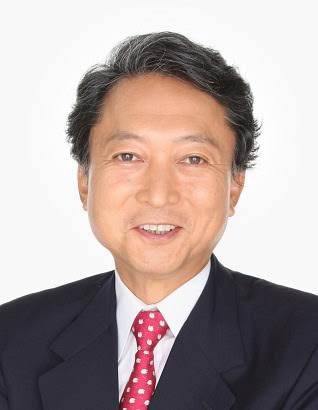

Editor’s note: Yukio Hatoyam is the 93rd Prime Minister. He gave this speech at the Third Asia Pacific Forum on Development—A Jimmy Carter Conversation on Waging Peace on July 17, 2026 at Waseda University, Tokyo. )
Today, I would like to extend my heartfelt congratulations on the opening at Waseda University of the Third Asia Pacific Forum on Development–A Jimmy Carter Conversation on Waging Peace jointly hosted by The Carter Center and the Chancy Foundation. President Carter was a president who loved peace and championed human rights, but his achievements became even more remarkable after he established The Carter Center in 1982. In particular, following the deterioration of relations between the United States and Cuba, he became the first former U.S. president to visit Cuba and meet with Chairman Fidel Castro in 2002. For these and other achievements, he was awarded the Nobel Peace Prize in 2002. In a sense, I believe this was almost equivalent to The Carter Center itself receiving the award.
Waseda University also has a remarkable connection to my own family: during its early years, my great-grandfather, Kazuo, served as its president. I feel a curious sense of destiny in this connection. Kazuo’s eldest son, Ichiro Hatoyama, adopted as a central political ideal the philosophy of “fraternity” advocated by Count Richard von Coudenhove-Kalergi, who in 1947 founded the Pan-European Union, the oldest organization devoted to European integration. Count Coudenhove-Kalergi’s Pan-Europeanism gave rise to the European Coal and Steel Community after the Second World War. Although its development was marked by many twists and turns, it eventually evolved into today’s European Union, transforming Europe as a whole into what is, in effect, a community in which war no longer occurs. Following this example, I would like to establish an East Asian Community consisted of Japan, China, South Korea, and the ASEAN countries, and make East Asia a community in which war can never happen again—a community of peace without war. There are critics who argue that a community was possible in Europe because its countries are relatively similar in terms of their size, economic strength, political systems, ethnic composition, and religions. East Asia, by contrast, consists of countries of vastly different sizes and economic strengths, with diverse political systems, ethnicities, and religions, and therefore such a community would be impossible. Yet I believe that the East has a tradition that regards harmony as the highest value. If such a community could be achieved in Europe, then there is no reason why it should not be possible in the East. President Xi Jinping himself has stated that not only the East but the entire world constitutes a “community with a shared future for humanity.” This is precisely the spirit of fraternity.
I define fraternity among nations as “mutual respect,” “mutual understanding,” and “mutual assistance,” and I advocate the concept of the “Sovereignty of Fraternity”—an understanding of “coexistence,” meaning the fulfillment of our “responsibility to live together.” I myself founded the East Asian Community Institute and have repeatedly visited China, South Korea, and other countries, apologizing for Japan’s responsibility for its wars and colonial rule and engaging in reconciliation efforts. This is because I believe that a defeated nation bears unlimited responsibility. For example, the defeated country cannot declare that an issue has been resolved simply because it has paid some amount of reparation. We must continue to maintain a spirit of apology until the people of countries that were invaded by Japan, such as China, and countries that were colonized, such as Korea, themselves tell us that they no longer wish to pursue further claims of responsibility. I believe that when they come to feel this way, the vision of an East Asian Community will also begin to move forward. I am convinced that an ethic of responsibility for the past is precisely what will build the future of democracy.
Unfortunately, however, what is lacking among many of the world’s leaders today may be precisely the exercise of the Sovereignty of Fraternity.
A sovereign state has a responsibility to protect its own citizens. At the same time, however, it must also bear a responsibility not to unnecessarily injure the dignity of the people of other countries through the exercise of that sovereignty. The Sovereignty of Fraternity is an attitude that seeks to assume both of these responsibilities simultaneously. More concretely, it means: when considering our own national security, taking into account the anxieties and historical experiences of neighboring countries; when pursuing economic interests, not ignoring poverty in other countries or the environmental burdens imposed upon them; and rather than speaking of peace solely in terms of alliances and the balance of military power, creating mechanisms through which the entire region can “live together.”
I would like to call this shift in perspective the Sovereignty of Fraternity. The modern sovereign state developed under the fundamental principles that “each country decides its own affairs” and that it should “not be subject to interference from other countries.” Historically, these principles played an enormous role in preventing domestic despotism and developing the nation-state.
But now, in the 21st century, we face a multitude of challenges—including climate change, infectious diseases, enormous inequality, war, and refugee crises—that cannot be solved by any one sovereign state alone. Nevertheless, if countries continue to compete with one another in the name of sovereignty while proclaiming “my country first,” the sustainability of the entire planet will be lost. That is precisely why we need to reconsider the very substance of sovereignty itself. We must shift from “sovereignty for excluding others” to “sovereignty for realizing coexistence and fraternity.” That is what I mean by the Sovereignty of Fraternity.
Around the world, violence is currently being carried out in the name of sovereignty. In the war in Ukraine, Russia, feeling threatened by NATO’s eastward expansion, asserted its own national security and sphere of influence in the name of “sovereignty” and proceeded to launch a military invasion. On the other hand, the Western countries supporting Ukraine have also continued their military assistance under the banners of “national sovereignty” and “defending the international order.” Here, both sides claim “sovereignty” and “justice.” This is precisely the principle of excluded middle. And yet, as a result, countless lives have been lost and people’s lives have been destroyed. In the face of this reality, I believe we are being asked to reconsider what we mean by “sovereignty.”
On this question of sovereignty, Columbia University Professor Jeffrey Sachs has stated: “A country that has U.S. military bases is not a sovereign country. It is not an independent country. Japan is still occupied by the United States even after 80 years. NATO is the same.” He has harshly criticized Japan and NATO countries, arguing that they cannot be considered independent states. Japan is nineteen years away from reaching the centenary of its defeat in the war. One hundred years after the end of the war, will U.S. military bases still exist throughout many parts of Japanese territory, including Okinawa? Japanese aircraft cannot freely fly through the airspace over the capital. Can a country like that truly be called a sovereign and independent nation, let alone one exercising the Sovereignty of Fraternity?
Sachs has also spoken about the U.S. attack on Iran, saying: “The countries that host U.S. military bases say that Iran is the aggressor. It is as though they have turned the whole world upside down. They can never tell the truth about the country that is occupying them.” He is absolutely right. As was evident during Prime Minister Takaichi’s visit to the United States, the Japanese government has still not only refrained from criticizing the United States and Israel, but has also made statements suggesting that Iran is at fault because it is attempting to acquire nuclear weapons.
I visited Iran in 2011. At the time, President Mahmoud Ahmadinejad said that Iran, like Japan, advocated the peaceful use of nuclear energy. However, he said that because the United States could not bring itself to trust Iran, he wanted to terminate the negotiations. I remember telling him that Japan, too, had taken a long time because the United States had been reluctant to trust us, and that I sincerely hoped Iran would persevere patiently. Iran subsequently continued negotiations, and I was extremely pleased when the JCPOA was reached in 2015 between Iran and the P5+1. Even afterward, until Israel and the United States attacked Iran last June, Iran had continued to cooperate with nuclear inspections by the International Atomic Energy Agency (IAEA). Ayatollah Khamenei, Iran’s Supreme Leader who was killed in the recent attack, had in the first place prohibited the possession of nuclear weapons on the basis of Islamic doctrine. Therefore, it is a fact that there was no imminent nuclear threat, and the justification for attacking Iran on the grounds of nuclear weapons cannot be accepted. But was it not a major mistake for Israel and the United States to assassinate Khamenei through an attack on Iran when he himself had prohibited the possession of nuclear weapons?
On June 17, Iran and the United States signed a memorandum of understanding aimed at ending hostilities across all fronts and reducing tensions. The two sides agreed to establish a 60-day negotiating period on issues including the nuclear question, with the goal of reaching a final agreement. The reopening of the Strait of Hormuz was also supposed to take place by mid-July. However, the two countries have already resumed a cycle of airstrikes and retaliation. Iran has re-closed the Strait of Hormuz, while the United States claims that it will allow vessels to pass only after charging high transit fees. Tensions remain extremely volatile, with the situation on the brink of escalation. I pray that the memorandum that has been signed will not be abandoned.
From the perspective of the Sovereignty of Fraternity, sovereignty should not be exercised according to the principle of excluded middle, seeking the “complete victory of one’s own country.” Instead, it should be exercised from the standpoint of the principle of inclusive middle, seeking “compromise and reconciliation so that we can live together.” Without a conception of security that takes into account the dignity of the people of the opposing country as well, wars cannot be stopped. From the perspective of the Sovereignty of Fraternity, sovereignty is not merely “the right to subjugate the other.” It is also “the responsibility to exercise self-restraint in order to live together with the other.” Without the courage to say, “We have a legitimate cause too. But even so, we will take one step back,” violence will not stop. It may seem exceedingly difficult to instill a spirit of fraternity in those directly involved in war. But I believe that mediators who understand the Sovereignty of Fraternity must explain to the parties to the conflict the importance of living together with the other side. Ideally, Japan, which has maintained friendly relations with both the United States and Iran, should have played this role. But under the Takaichi administration, which follows the United States, this cannot reasonably be expected.
That is precisely why we must once again ask ourselves: On what values should sovereignty be exercised? Should popular sovereignty remain merely a “right of the people to control the state,” in the sense of a “my country first” approach? Or should we expand it into a “responsibility for people to live together with one another, and furthermore with the people of other countries”? I would like to call this transformation in thinking the Sovereignty of Fraternity.
The wars in Ukraine and Iran herald the arrival of an era in which regional wars affect and interact with the entire world. As a result, many countries have rapidly increased their military budgets. The Japanese government today, too, under the pretext that the security environment surrounding Japan is becoming increasingly severe, has raised defense spending from approximately 1 percent of GDP to 2 percent, and there is concern that it may increase it even further, to more than 3 percent.
But threat = capability × intent. If we increase our military capabilities, the other side will naturally seek to increase its own capabilities as well. As a result, we may actually end up increasing the threat posed by the other side. What is important is to reduce the other side’s intention to attack us. To do so, we must make efforts to build trust through dialogue and other means. Government-to-government dialogue is one possibility; exchanges among private citizens are another. We should respect one another, recognize our differences, deepen our understanding, and, when necessary, complement and assist one another. If the spirit of fraternity can truly take hold, there will be no need to needlessly increase military power.
If a spirit of fraternity can take root among the countries of East Asia, an East Asian Community will become a reality. One obstacle is Japan’s understanding of its own history. As I mentioned earlier, Japan must fulfill its unlimited responsibility for the past. The other is Prime Minister Takaichi’s statements concerning a “Taiwan contingency.” Prime Minister Takaichi made remarks that were understood to mean that, in the event of a contingency in Taiwan, Japan would cooperate with the United States to support Taiwan and fight China, thereby provoking China’s strong anger. Because these remarks differ substantially from the arrangements established in the 1972 Joint Communiqué of the Government of Japan and the Government of the People’s Republic of China, genuine reconciliation between Japan and China will be very difficult to achieve unless Prime Minister Takaichi withdraws her remarks.
If things continue in this way, it is difficult to imagine a world without war emerging from clashes between competing claims of sovereignty. And the East Asian Community may likewise remain suspended in limbo because of Japanese self-interest.
Will we continue to cling to an exclusive conception of sovereignty that says, “It is enough if we can protect our own country”? Or can we dare to take one step forward toward a higher level of sovereignty—one that protects our own country while also protecting the dignity of the people of other countries? I believe that the world is now demanding such a decision from each and every one of us.
But I will not give up. Rather, through opportunities such as this, I hope to spread the idea of the Sovereignty of Fraternity throughout the world, so that the entire world may become a community of peace without war. I also hope that the East Asian Community, working together with all of you in Europe, America, and elsewhere, can pursue a path toward a global community. To everyone gathered here at the Carter Center Peace Forum: Let us walk forward together, so that we may fulfill our responsibility for democracy and a peaceful future for the world!